Aviation numbers
The spelling alphabet, digits and all.
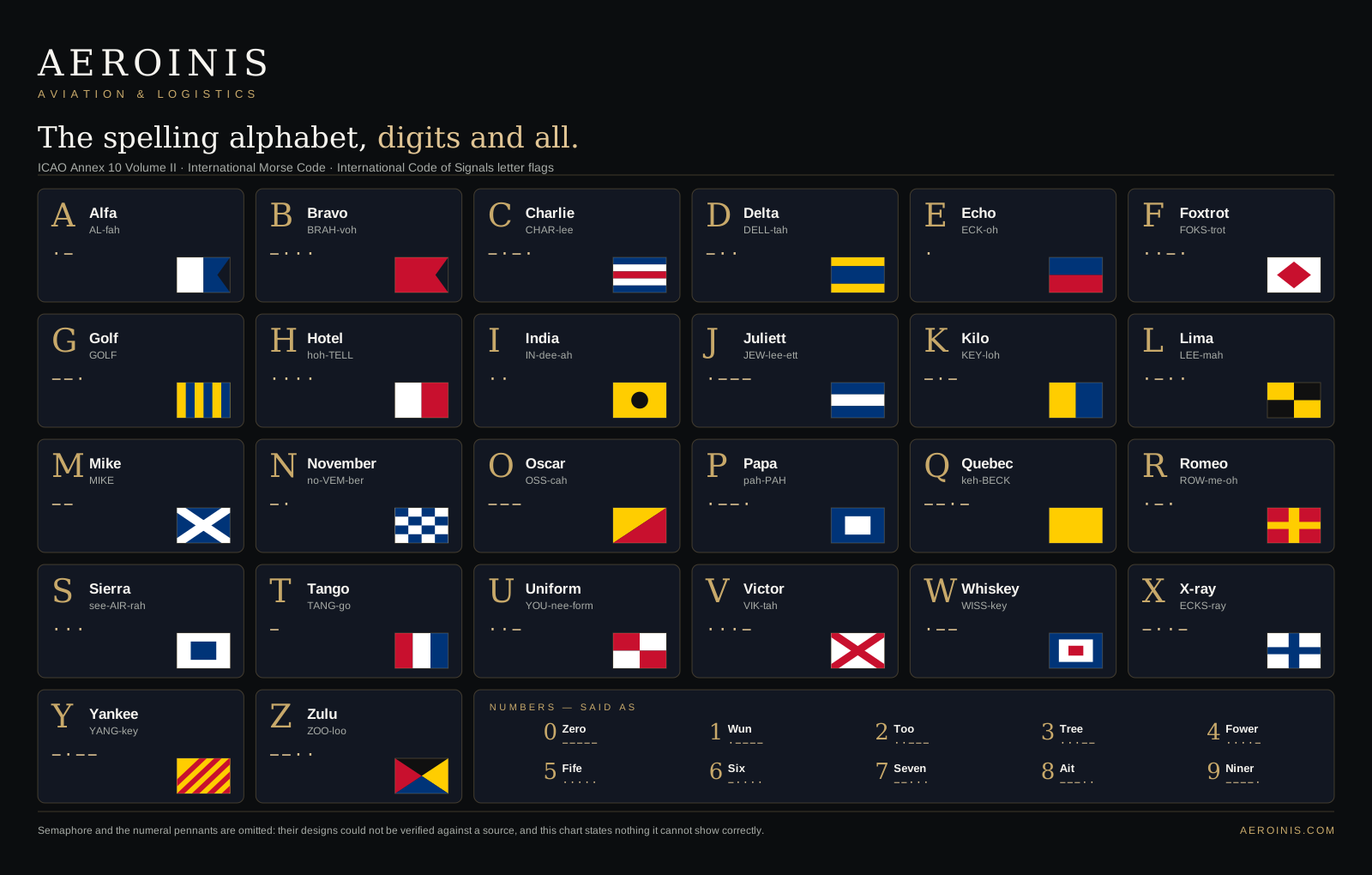
Twenty-six words everyone knows, and ten more that most published tables leave out. The digits are the half that actually causes trouble on a radio.
- 26 + 10Letters and digits. Most published tables carry only the letters.
- Alfa, JuliettNot typos. Both spellings are in the standard and both are deliberate.
- 1956The year the alphabet was finalised. Unchanged since, at sea and in the air.
The letters
Code word, spoken form, and the Morse equivalent that still sits underneath every navigation aid identifier.
The digits — the half most tables omit
Five of these ten depart from ordinary English, and every departure removes a specific hazard rather than a stylistic preference.
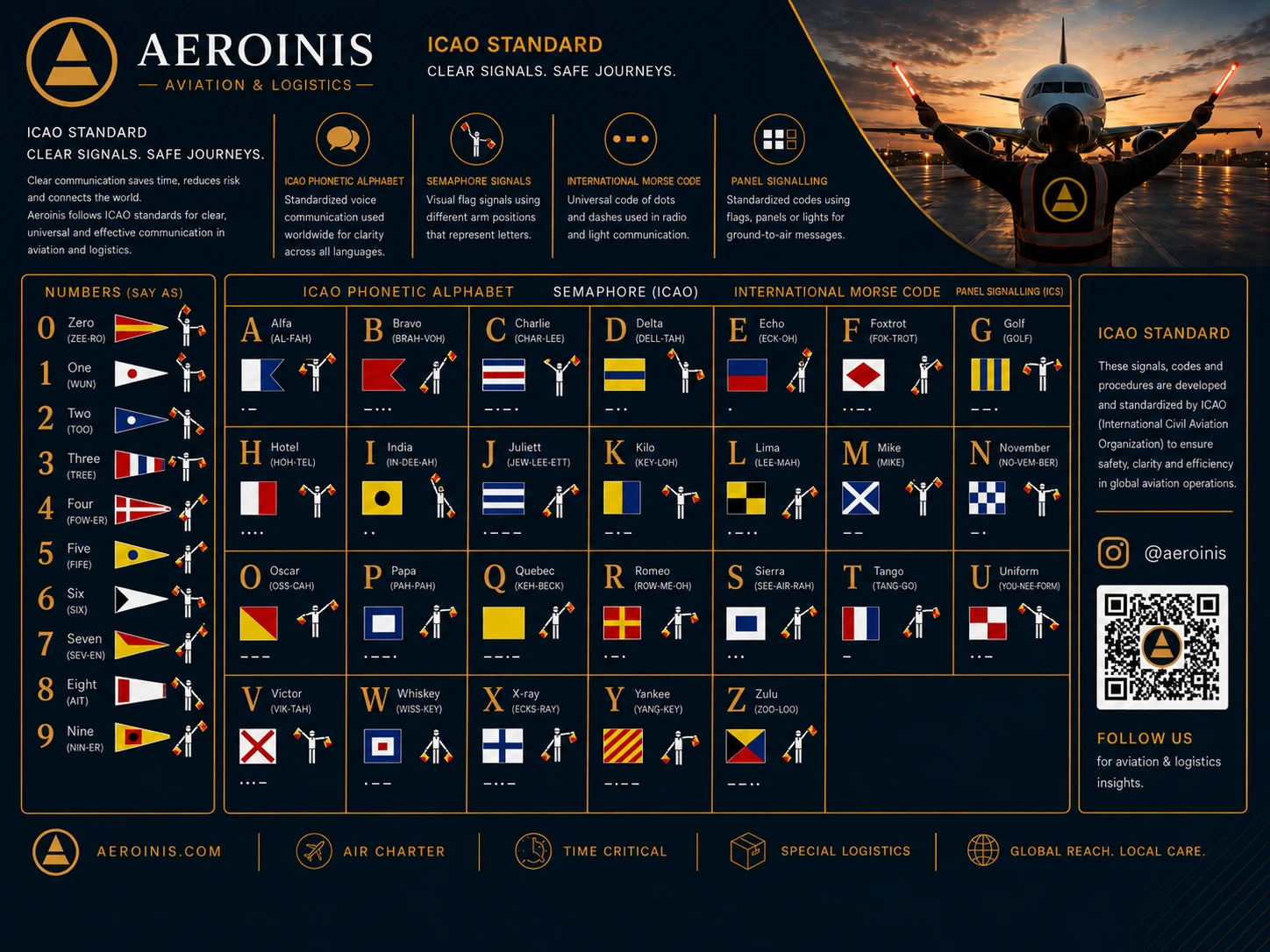
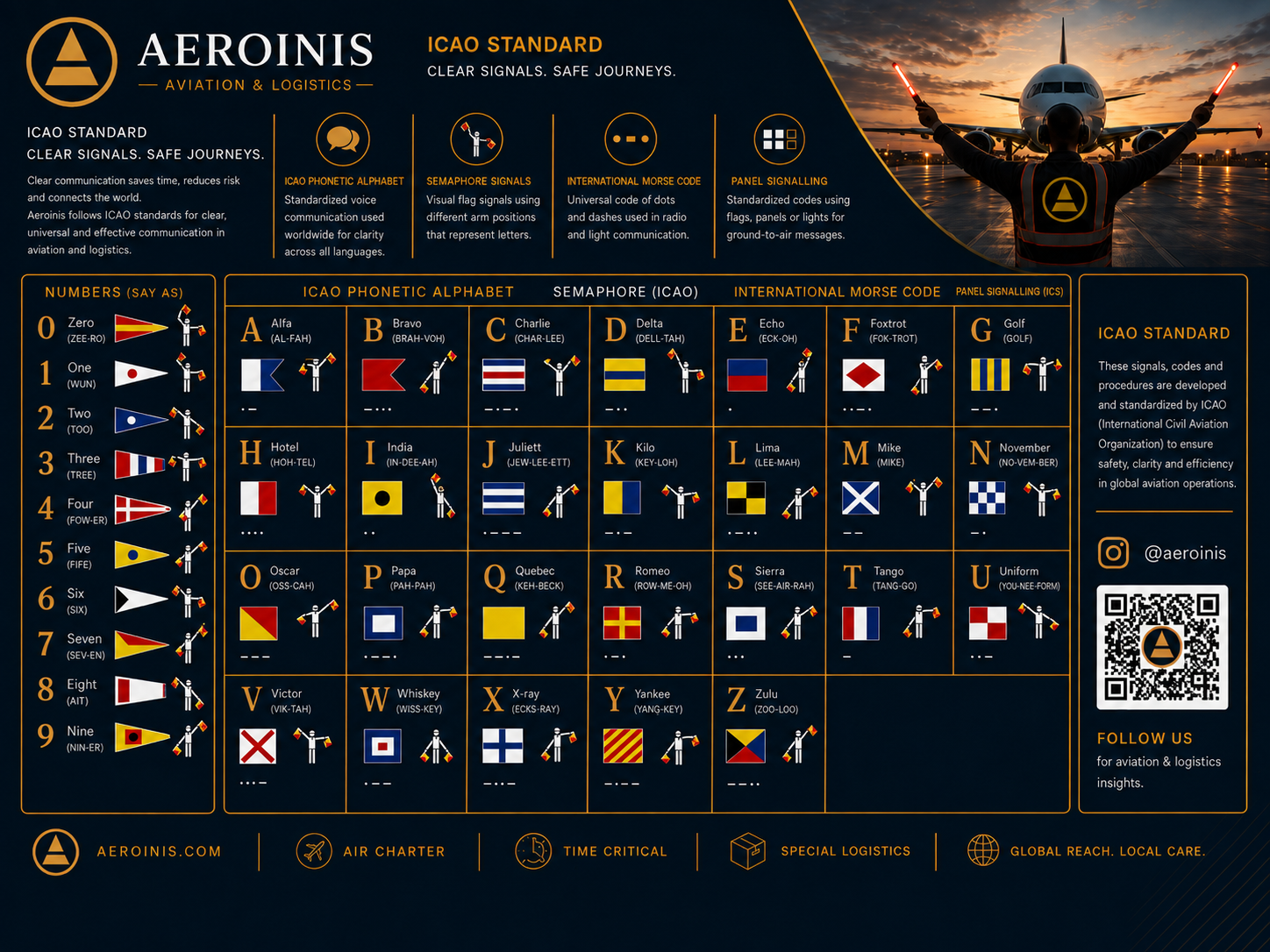
Printable chart and poster
Why an alphabet at all
Aviation runs on abbreviations and short codes, spoken over radios that clip the ends of words and through the accents of every country a route crosses. B and P sound alike. M and N sound alike. A misheard letter in a registration or a clearance is not a small error — it puts the wrong aircraft on the wrong instruction.
So each character gets a whole word instead, chosen so that no two are confusable even when the transmission is poor. It is one of the quietest pieces of safety engineering in the industry and it costs nothing to use.
Two spellings look like typing mistakes and are not. Alfa drops the PH because speakers of many languages do not read PH as F. Juliett carries the second T so that French speakers do not silence the last one. Both are deliberate, and both are in the standard.
What each digit is avoiding
- Tree for three — the "th" sound barely survives a VHF radio, and many speakers do not have it at all.
- Fower for four — keeps it from being heard as "for".
- Fife for five — keeps it from being heard as "fire", a word nobody wants to mishear on a flight deck.
- Niner for nine — keeps it apart from the German nein.
- Wun, too and ait harden the ends of one, two and eight so the word does not vanish into static.
A decimal point is said as "decimal", and thousand is spoken "tousand" for the same reason three became tree.
Where it turns up outside a cockpit
The same alphabet is used at sea, in NATO military traffic, by emergency services and by anyone reading a reference number down a bad line. If you are ever asked to confirm a booking reference to our desk, this is the alphabet we will read it back in.
What this does not tell you
- It is a spelling alphabet, not a phraseology. Standard radio phrases — how to state a callsign, what to read back, when to say "say again" — are a separate discipline.
- Callsign and airline telephony designators are their own list and are not derived from these words.
- Light-gun signals, ground marshalling and airfield sign conventions are separate standards with their own meanings; nothing here should be read across to them.
ICAO Annex 10, Volume II — Aeronautical Telecommunications, which carries the spelling alphabet and the number pronunciations. The alphabet was finalised in 1956 and is used unchanged in maritime and NATO communications. Morse equivalents are the ITU international code. Pronunciations are given in the standard's own respelling; regional practice varies slightly and the written code word always governs.